
There are no results matching your search
Related topics people search
Roig Herrero surname origin
The surname “Roig Herrero” is a compound Spanish name, made up of two separate surnames—common in Spain and Hispanic cultures (paternal + maternal family names). Each part has its own origin:
1. Roig
- Origin: Catalan (from northeastern Spain, especially Catalonia)
- Meaning: “red” [1]
- Type: Descriptive surname
- It likely referred to someone with red hair, or a ruddy complexion
- It is typical of Catalan-speaking regions and reflects physical traits or sometimes symbolic color associations.
2. Herrero
- Origin: Spanish
- Meaning: “blacksmith” (worker in iron) [2]
- Type: Occupational surname
- Derived from Latin ferrarius (ironworker), similar to the English surname “Smith.”
- It originally identified someone whose trade was forging tools, weapons, or metal goods.
What Roig Herrero means together
It doesn’t form a single combined meaning—rather, it reflects two family lineages:
- One from a Catalan descriptive surname (Roig)
- One from a Spanish occupational surname (Herrero)
So, a person named Roig Herrero likely has:
A paternal or maternal line from Catalan roots, and
Another from broader Spanish ancestry linked to blacksmithing traditions
Notable figures with the Roig Herrero surname
The Roig Herrero name is closely associated with the leadership of Mercadona—one of Spain’s largest supermarket chains—as well as major philanthropic efforts in art and education.
Key figures in this family partnership include:
Juan Roig Alfonso – CEO and Chairman of Mercadona. A billionaire businessman, he is among the wealthiest individuals in Spain and has played a central role in transforming the family company into a leading European food retailer.
Hortensia Herrero – Wife of Juan Roig, she is a businesswoman, philanthropist, and prominent art collector. She owns 28% of Mercadona, serves as president of her namesake foundation, and founded the Hortensia Herrero Art Centre in Valencia.
Fernando Roig Alfonso – Juan Roig’s brother, he is also a billionaire, holding a 9% stake in Mercadona. He is the owner and president of Villarreal Football Club.
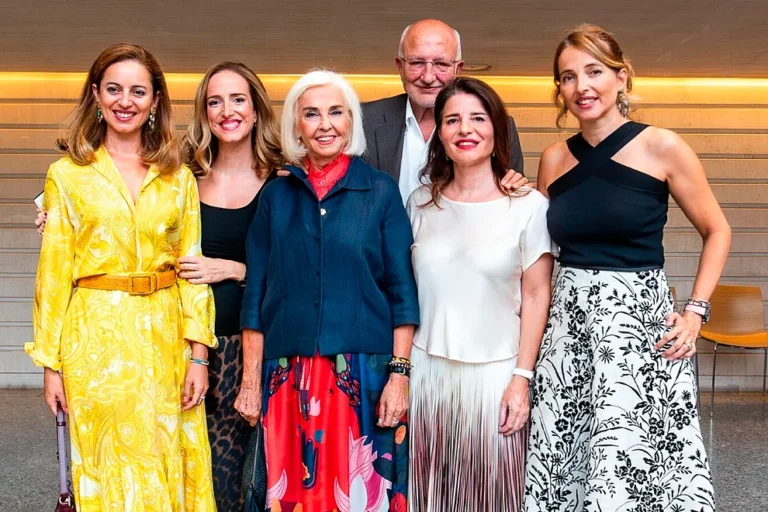
The Roig Herrero daughters – The couple has four daughters—Carolina, Hortensia, Amparo, and Juana—who are often highlighted in Spanish business media as future stakeholders and potential leaders within the company.
More notable figures with the Roig or Herrero surname
Here are some notable people with each surname:
Roig
Alfonso Roig – Influential patron of modern art in Spain.
Jaume Roig – 15th-century author best known for Spill o Llibre de les dones.
Nuria Roig – Competed internationally in fencing events.
Herrero
Ángel Nieto – While not a Herrero by surname, closely tied to the famous racing era that included Herrero riders. (Contextual mention)
Eladio Jiménez Herrero – Professional road racing cyclist.
Ismael Herrero – Competed in athletics at an international level.
Juan Carlos Herrero – Known in Spanish football circles.
Fernando Herrero – Played professionally in Spain.
More about the Roig Herrero family
The Roig Herrero family (often written Roig–Herrero) refers to one of the most prominent business families in Spain, best known for controlling the supermarket giant Mercadona.
At the center of the family are:
- Juan Roig – businessman and president of Mercadona
- Hortensia Herrero – his wife, major shareholder and vice president of Mercadona
Together, they form the core of the “Roig-Herrero” family business group. (Wikipedia)
What they are known for
- They turned Mercadona from a small local chain into one of Spain’s largest supermarket companies. (Tharawat Magazine)
- The family collectively controls the majority of the company’s shares. (Tharawat Magazine)
- Their wealth places them among the richest families in Spain and Europe. (Levante-EMV)
Children and next generation
They have four daughters:
- Carolina Roig Herrero: Works directly for Mercadona as a coordinator of the market analysis division and serves as Secretary of the Audit Committee.
- Hortensia Roig Herrero: Serves as the secretary general of the EDEM business school (Escuela de Empresarios), which is closely associated with her father.
- Amparo Roig Herrero: An architect who leads the Valencia-based studio ERRE Arquitectura.
- Juana Roig Herrero: Involved in the digital side of the family business, having worked as the CEO of Mercadona Online.
All four are involved in business, education, or management roles connected to the family ecosystem (Mercadona, business schools, tech, and architecture). (El Debate)
Other interests
- Hortensia Herrero is a major art collector and philanthropist, with a foundation focused on cultural heritage in Valencia. (Wikipedia)
- The family is also involved in education, investment, and sports initiatives in Spain.
How Mercadona makes money and the succession
Here’s a clear view of both: how Mercadona makes money and how the Roig–Herrero succession is expected to work.
1. Mercadona’s business model (why it’s so profitable)
Mercadona is often compared to Aldi and Lidl, but its model is slightly different and very Spain-focused.
Core idea: “high efficiency + private label dominance”
A. Private label strategy
Around 70–80% of products are Mercadona-owned brands
These are called “Hacendado” (food), “Deliplus” (personal care), etc.
Fewer external brands = lower costs + higher control over quality and margins
B. Supplier partnership model (“totaler system”)
Mercadona works with a small group of stable suppliers
Long-term contracts instead of constant price bidding
Suppliers co-develop products with Mercadona
Result: fewer disruptions, better consistency, lower supply-chain costs
C. Logistics efficiency
Highly centralized distribution system
Stores are replenished daily with very precise stock levels
Strong data-driven forecasting (demand prediction is key)
D. Store format
Standardised large supermarkets
Simple layout, no unnecessary branding or marketing inside stores
Focus is on speed and convenience rather than “shopping experience”
E. Pricing philosophy
Not the cheapest in Spain, but “best value for consistent quality”
Avoids price wars like some discount chains
Why it works
Extremely low waste
High inventory turnover
Strong customer loyalty in Spain and Portugal
Very tight operational control
2. The Roig Herrero succession structure
Juan Roig
Hortensia Herrero
Unlike many family businesses, Mercadona is not planning a simple “inheritance split”.
A. No direct dynastic handover
Juan Roig is still actively leading the company
Control is not being divided equally among heirs in a traditional way
The company is structured to stay unified and professionally managed
B. Gradual integration of the daughters
The four daughters are being positioned into specialized roles, not full CEO succession:
One focuses on digital transformation / e-commerce (important future area)
Others are involved in education, architecture, or corporate governance
They are being trained more like professional executives than heirs
C. Family ownership remains consolidated
The family maintains majority control through private holding structures
No plans for IPO or external dilution of control
Strategy is: keep ownership tight, management professional
D. Likely long-term outcome
Most analysts expect:
Continued family ownership control
A professional CEO model for daily operations (like today)
The daughters acting more like board-level owners than operators, depending on their paths
Who is the owner of Villarreal?
Villarreal CF is owned by Fernando Roig, a billionaire entrepreneur who has served as the club’s president since 1997. Under his leadership, Villarreal transformed from a modest lower-division side into a respected force in Spanish and European football, highlighted by their victory in the UEFA Europa League in 2021. Roig’s long-term vision and financial backing have been central to the club’s sustained growth and competitiveness.
Who is Fernando Roig?
Fernando Roig is a Spanish billionaire businessman best known as the president and owner of Villarreal CF, a role he has held since 1997. Born in Valencia in 1947, he is also the owner and president of Pamesa and a major shareholder in Mercadona, founded by his brother Juan Roig. Under his leadership, Villarreal has grown into a consistent force in Spanish and European football, highlighted by its 2021 UEFA Europa League triumph.
What is the richest family in Spain?
The richest family in Spain is the Amancio Ortega family. Amancio Ortega, founder of Inditex (the group behind Zara), built one of the largest fashion empires in the world. Through Inditex and its global retail dominance, the Ortega family has consistently ranked as the wealthiest in Spain, with his daughter Sandra Ortega also among the country’s richest individuals.
Which family owns Zara?
Zara is part of the global fashion group Inditex, but it remains firmly under the control of the Ortega family. Founded by Amancio Ortega in 1975, the business has grown into one of the world’s largest retail empires, with the family retaining a controlling stake in Inditex. Today, leadership has passed to the next generation, with Marta Ortega playing a central role, ensuring Zara continues to operate as a publicly listed company that is still guided by the vision and influence of its founding family.